Solutions
One closed loop.
OTmatic helps at both stages of an installation: engineering the project, and running it afterwards. Start with either one. Together they work best: when the control code comes from OTmatic, the process data is complete from day one, and what operations learns flows back into the next project.
Engineering & control generation
helped by agents.
One shared environment with proven component and technology libraries. Agents can only build with what is in it. Process experts review the visual model, not code, so the process knowledge stays in charge. Installations engineered up to 3x faster.
01
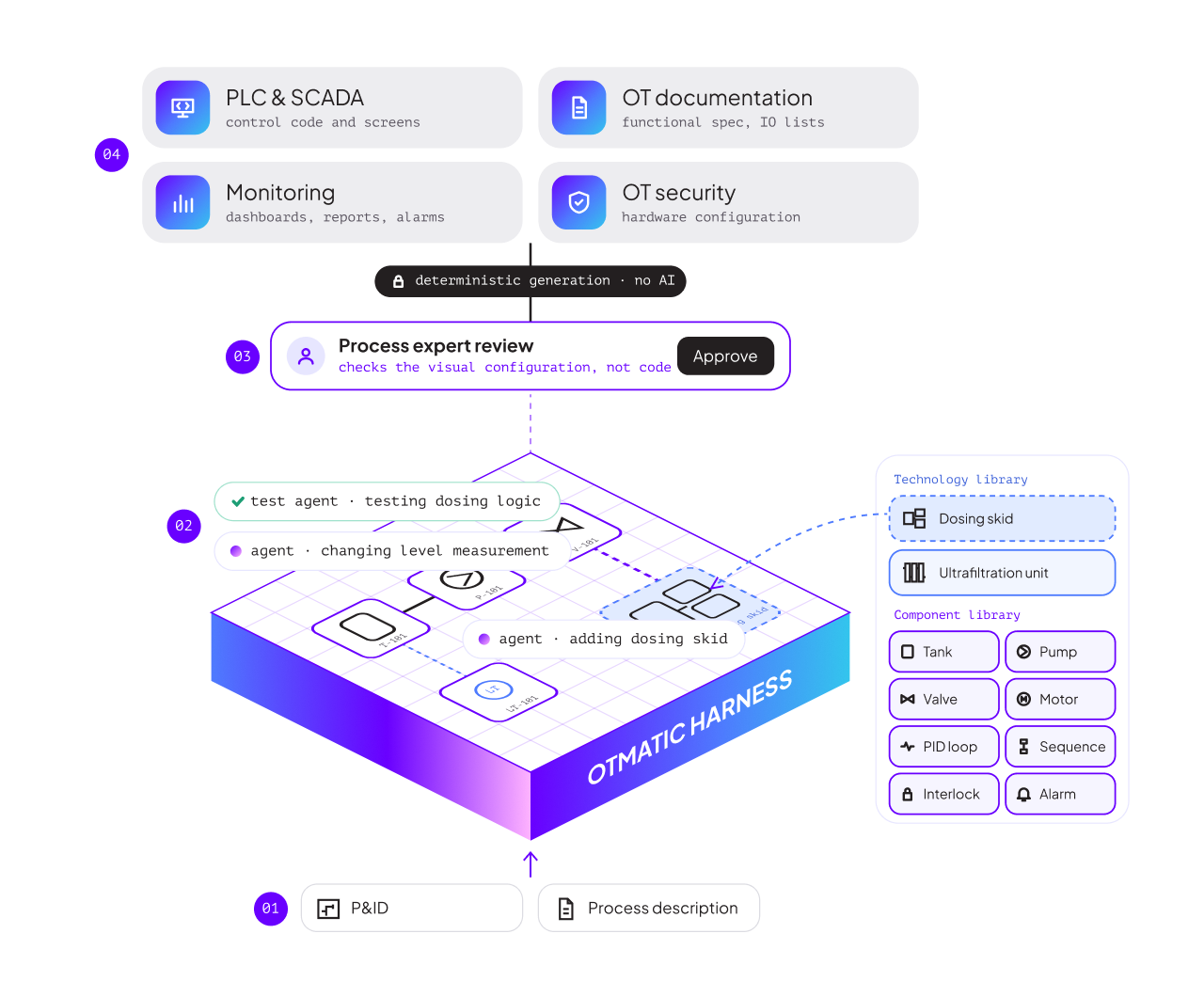
Input: your P&ID and process description
Engineering data is imported straight from your P&ID and electrical engineering, and stays in sync.
02
Agents build, test agents check the logic
OTmatic engineers build with AI agents that specialise in process automation engineering, using proven component and technology libraries. Your own team can join in when you want to.
03
Process experts review the visual configuration
Tanks, pumps, valves, sequences and interlocks in one visual language that process and automation engineers share. No code to read.
04
Every deliverable is generated, deterministically
PLC and SCADA, documentation, monitoring and OT security configuration. No AI touches the final code.
IT practices for OT
Version control and imports, built in.
Git version control on every change, and import functions for your engineering data, so nothing is typed twice.
OT technology library
Your process control IP vault.
The single source of truth for your company's process control knowledge. Every proven module is reused on the next line or site.
Shadow environment
Test before it runs. Train before it's live.
Test the logic against a virtual installation, and train operators and process engineers on the SCADA before start-up.
Complete process data
not a handful of tags.
The typical starting point: the data exists, but nobody can use it. When the data structure is generated together with the PLC, the dataset is complete from day one. Faster troubleshooting and process optimisation let you run more installations with the team you have.
01
Built in, not bolted on
Every block in our libraries publishes its complete state: values, sequences, interlocks, alarms and operator actions. Around 20,000 live data points for one ultrafiltration unit.
02
Stored once, in your own open database
Use any tool, without lock-in: Grafana, Metabase, Superset, Marimo, JupyterLab, Excel or your central SCADA.
03
AI on your data
Your own AI assistant queries the database through our MCP server, read-only, and shows the records behind every answer.
Complete process data
Give IT the whole plant, not 100 hand-linked tags.
Before: around a hundred tags reach IT, each linked by hand, without context.
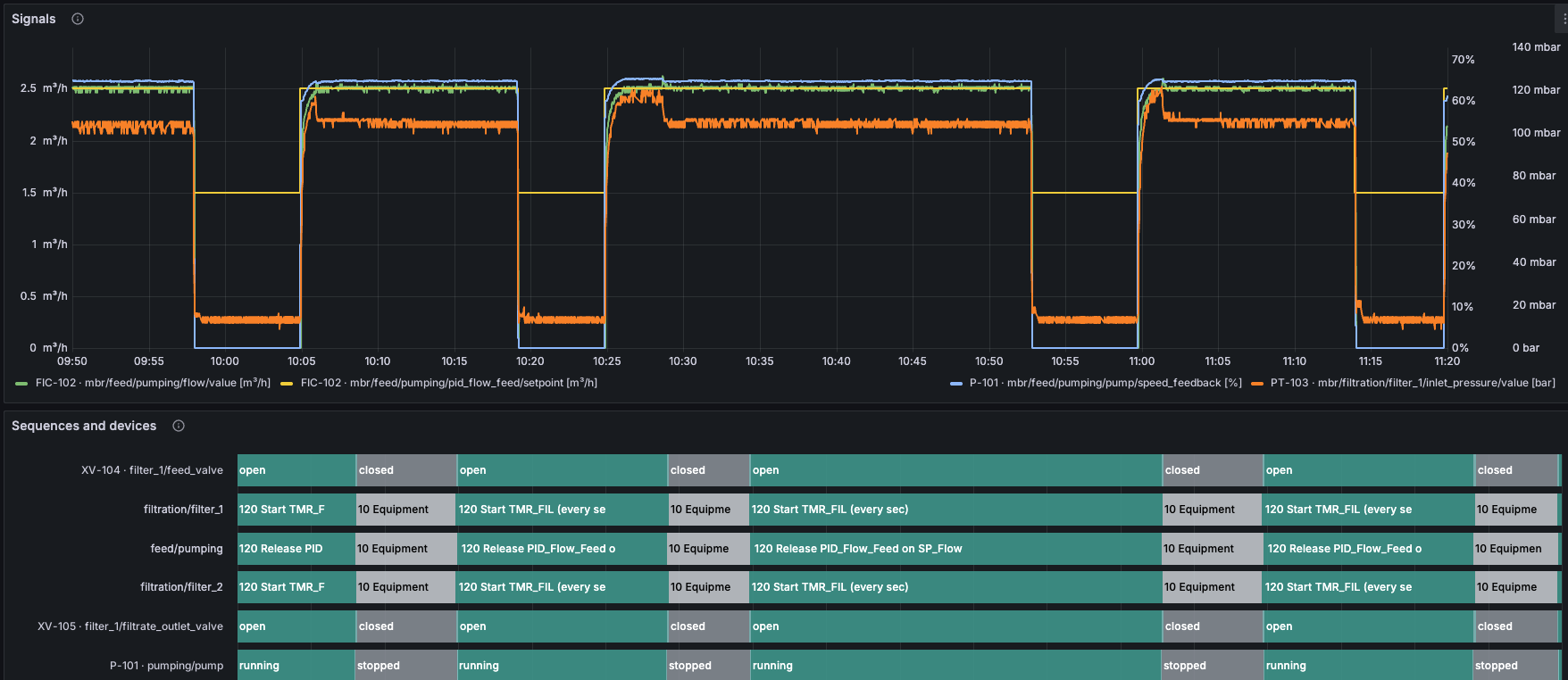
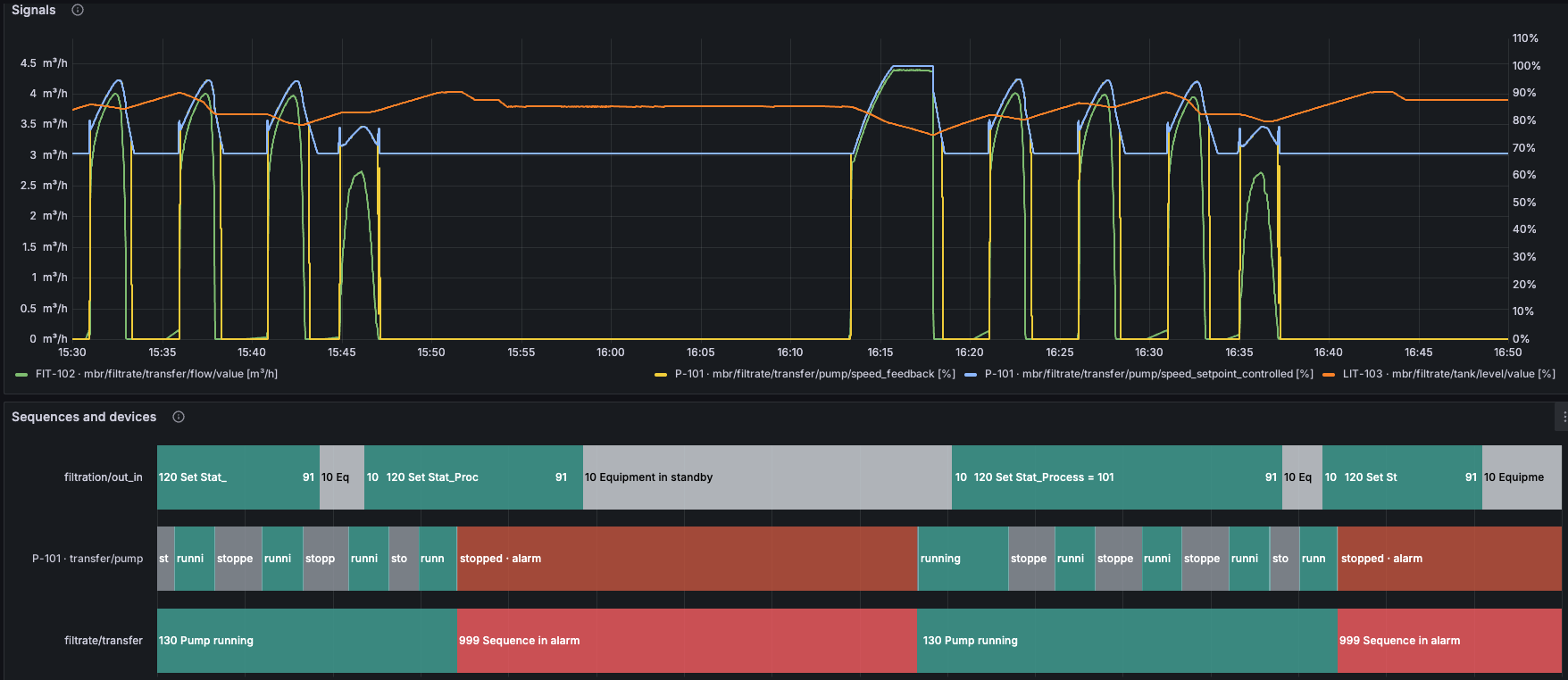
Every block publishes its complete state together with its engineering context: values, sequences, interlocks, alarms and operator actions. Around 20,000 live data points per unit as time series, in your own open database, ready for AI and detailed troubleshooting.
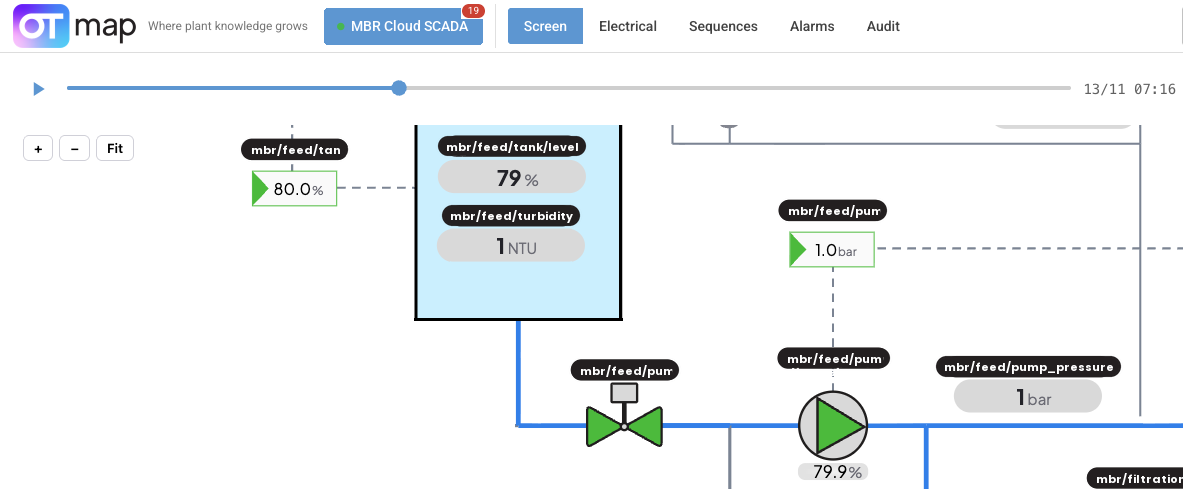
● Live in production
OT care
Looked after, long after commissioning.
Before: nobody owns the OT once the project team has left.
Firmware and PLC runtime updates, SCADA upgrades, firewall checks and an as-built that stays up to date, with fast intervention at a fixed price per year.
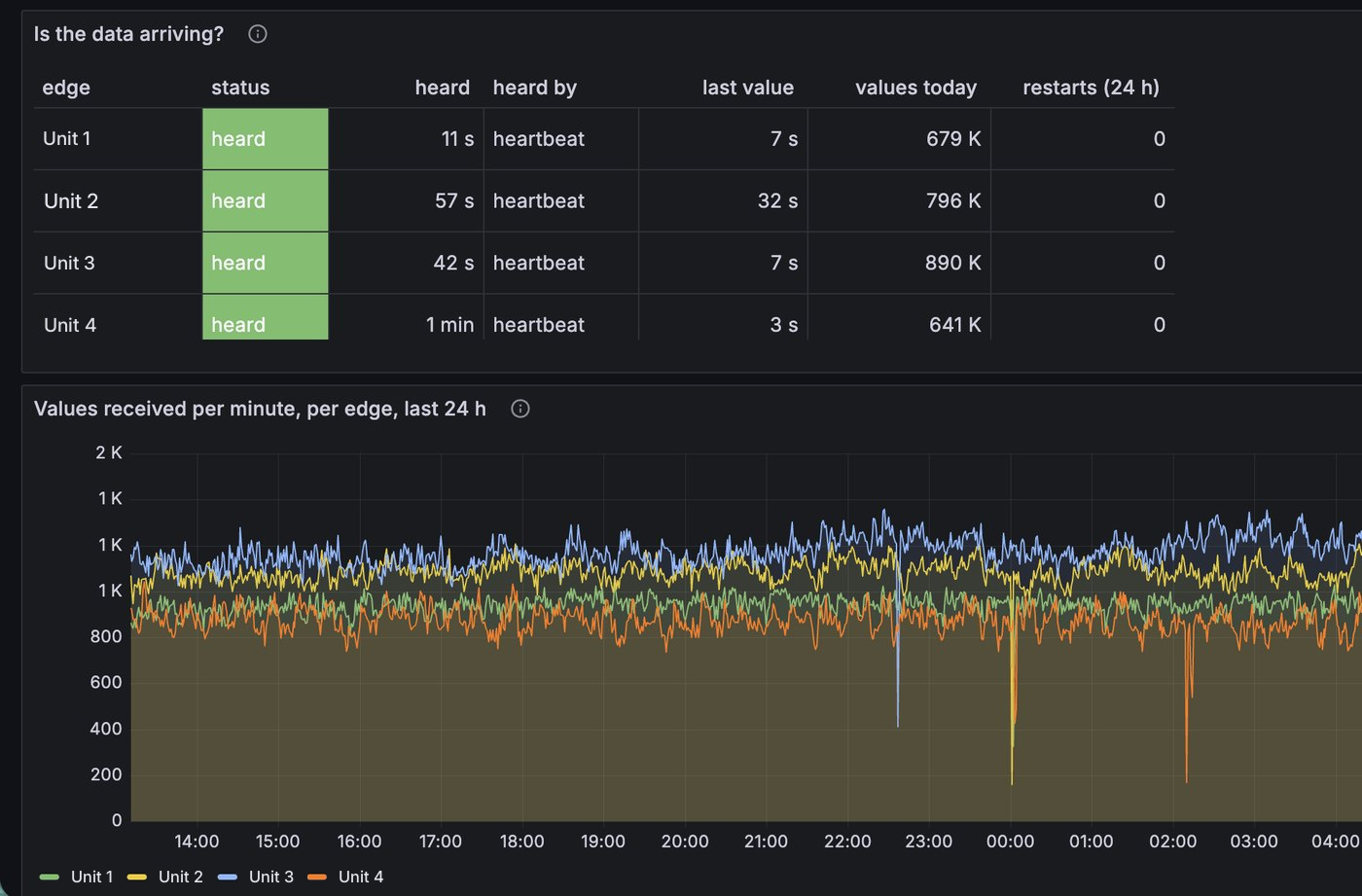
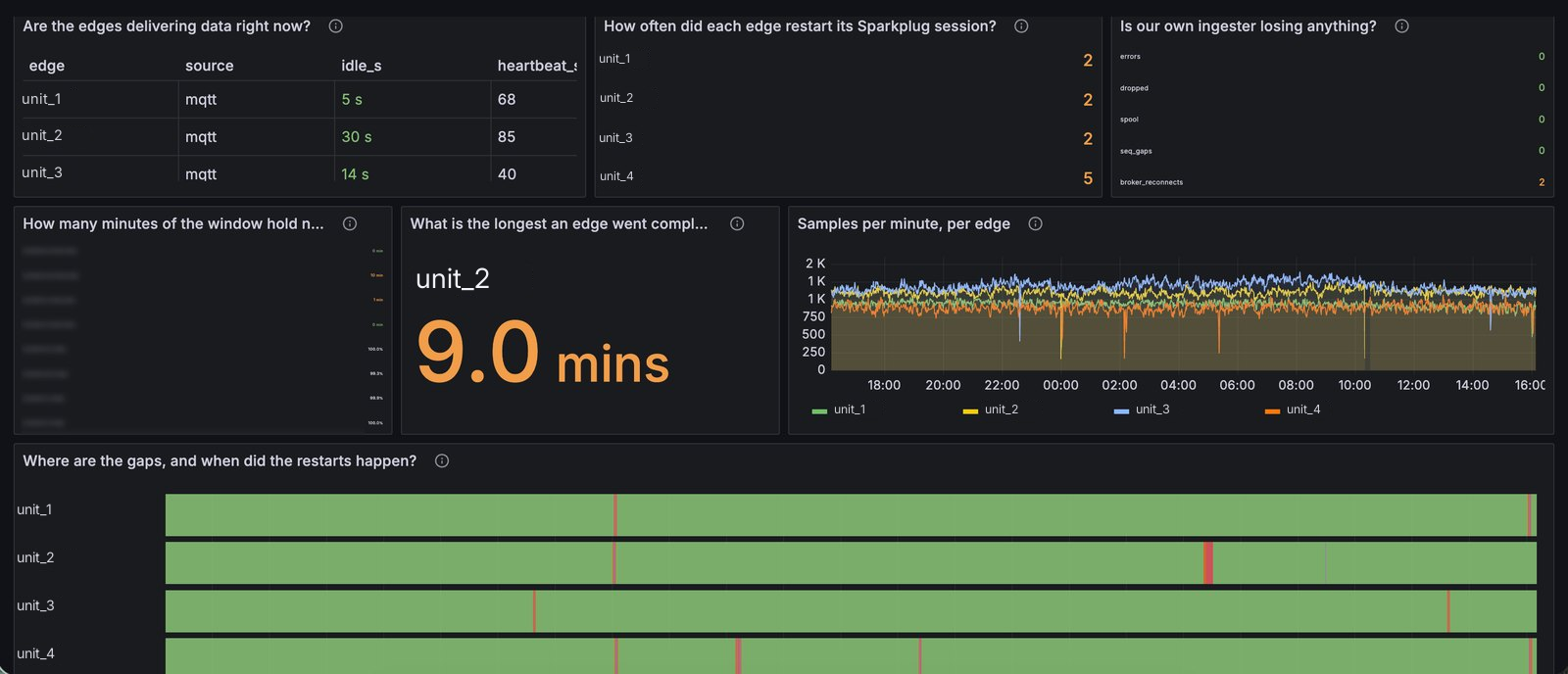
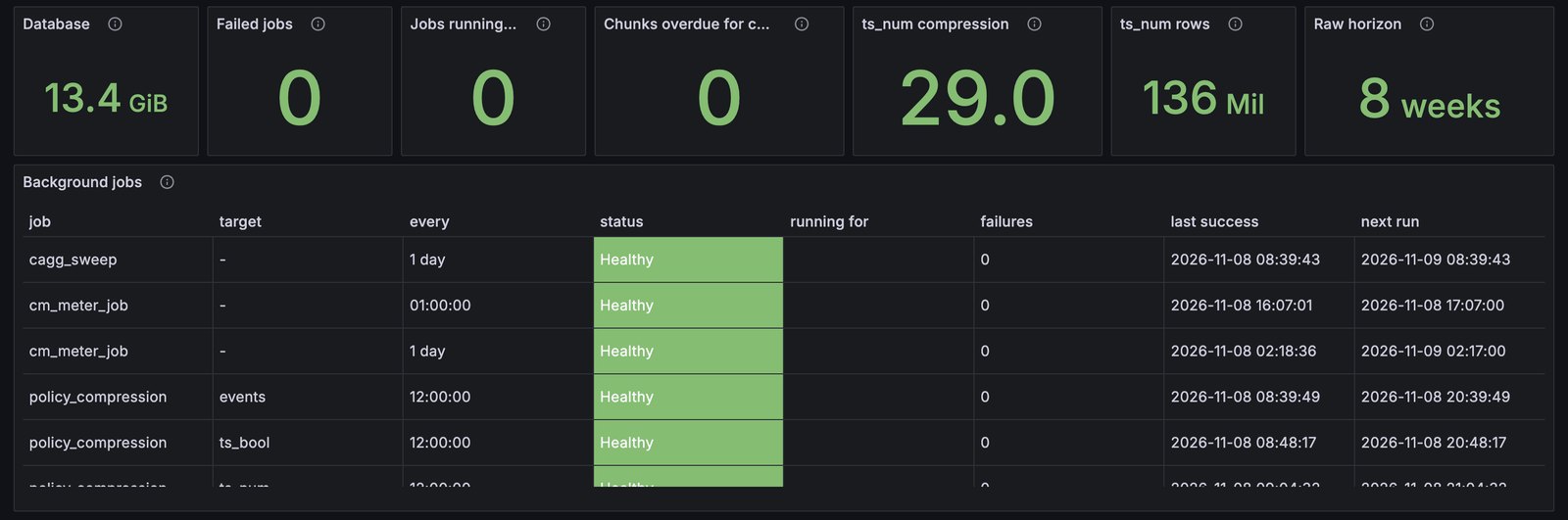
● Service level agreement
Closing the loop
Every installation gets better.
What the data shows in operations flows back into the model and your OT library: better sequences, setpoints and alarms on the next line or site. Built by OTmatic as a service, or together with your own engineers.